Family Life
Top 8 sensory stepping stones and balance boards for children with dyspraxia
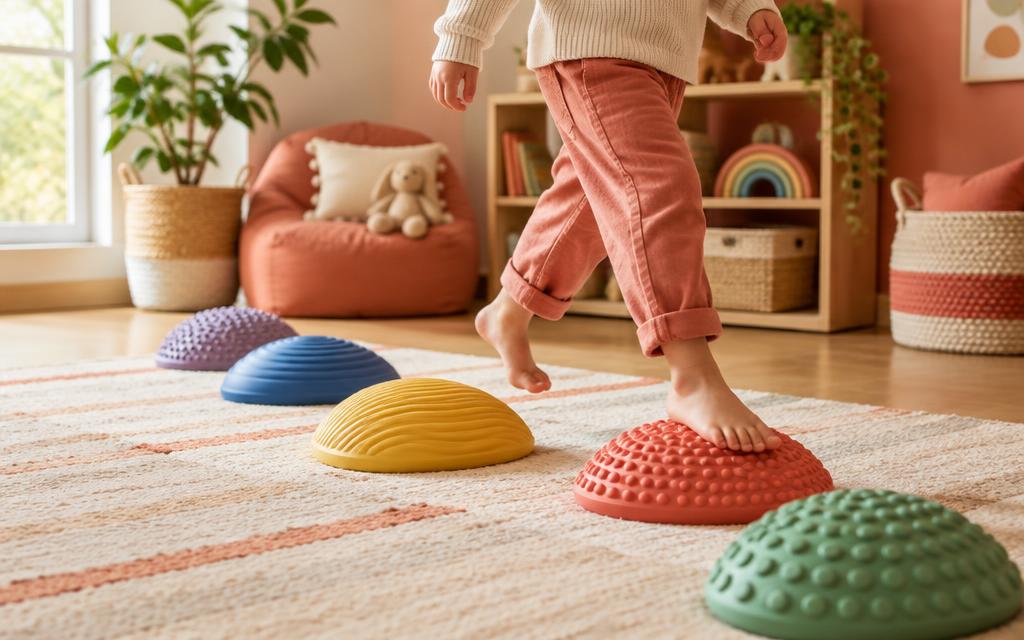
Children with dyspraxia often find balance and coordination genuinely hard work. Stepping stones and balance boards turn that work into a game, and they are some of the most commonly recommended pieces of home equipment. Here is what to look for, and eight types worth considering.
1. [Textured stepping stones](amazon-search:textured stepping stones kids). Non-slip stones with different surfaces give sensory feedback as well as balance practice. Look for a set with varied heights. 2. [River stones sets](amazon-search:river stones balance kids). These mimic crossing a stream and encourage children to judge distance and plan their steps. 3. [Wobble boards](amazon-search:wobble board kids). A simple curved board that rocks side to side. Start with your child holding your hands, then progress to solo standing. 4. [Balance beams](amazon-search:kids low balance beam). Low beams, just a few centimetres off the floor, build confidence without the fear of falling. 5. [Stepping buckets or stilts](amazon-search:kids bucket stilts). Upturned buckets with ropes, or beginner stilts, challenge balance and coordination together. 6. [Rocker boards](amazon-search:rocker balance board kids). These rock in all directions rather than just two, so they suit children ready for a bigger challenge. 7. [Balance pods](amazon-search:balance pods kids). Half-dome pods that can be arranged in paths, flat side up or down depending on difficulty. 8. [Hopscotch and floor markers](amazon-search:hopscotch floor mat kids). Not strictly equipment, but numbered floor spots encourage jumping, landing and sequencing.
Whichever you choose, use them on a clear, soft surface and supervise closely at first. Short, regular play builds skills faster than occasional long sessions. If your child is seeing an occupational therapist or physiotherapist, ask which activities would suit their specific needs, because they can often suggest exactly the right level of challenge.