Family Life
A useful indoor motor skills obstacle course
Written by Make SENse Team
Disclosure: We don't currently earn anything from the links on this page. If that changes, this notice will say so. We only suggest things we think could genuinely help.
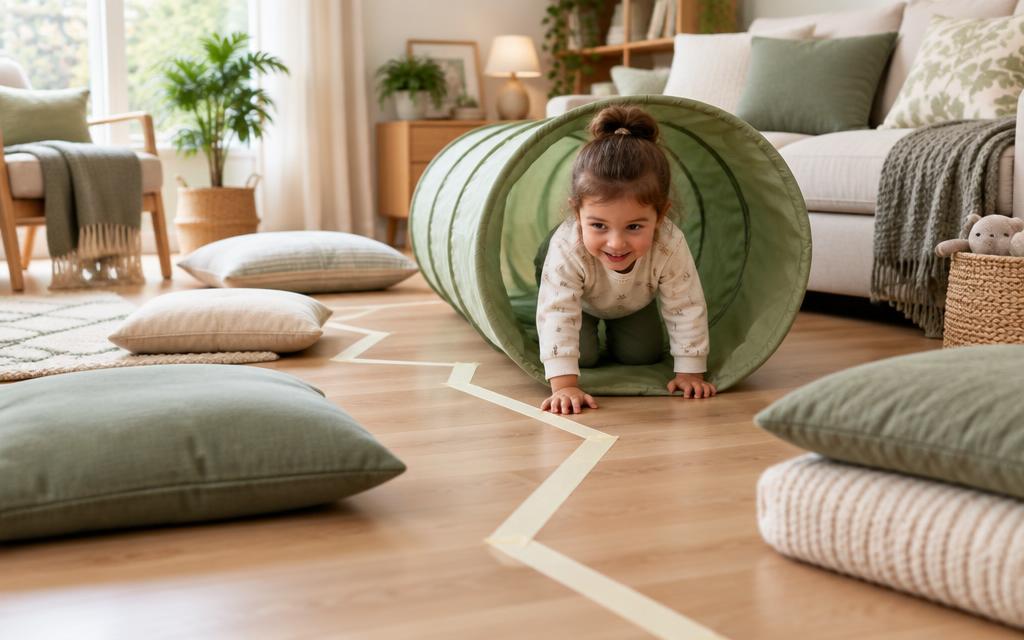
An obstacle course doesn't need a kit or a living room that looks like a soft-play centre. A couple of cushions, a clear patch of floor and a child who gets to choose the route are enough.
Build a tiny one first
Try three stops: step over a rolled towel, crawl under a table and put a soft toy in a basket. If the table is too much, go around it. If your child only wants to repeat the towel jump, let that be the game. Change one stop at a time rather than making a new course every round.
For a child who likes a visible path, tape marks on the floor can show where to go next. A play tunnel or low stepping stones might add variety later, but only if there is room to use and store them. Keep the route away from stairs and sharp furniture; avoid unstable chairs, high balancing and anything a child could get stuck in.
A game, not a workout
Let your child design the route, put a favourite toy at the end or do it alongside them. They might prefer carrying one object between stops to racing. Short, repeatable practice is more useful than trying to make the course exhausting. NHS guidance on coordination difficulties focuses on manageable practice of real movements, not special equipment.
If balancing alone is the favourite bit, our stepping stones guide goes into that choice in more detail.
Product links open Amazon UK or the provider's own website so you can compare options, prices and reviews. We don't sell these items. Always check age guidance and, if your child sees a therapist, ask what suits them.