Family Life
Scooter boards and proprioceptive equipment: a buying guide for SEN parents
You may have heard the word proprioception from an occupational therapist. It means your child''s sense of where their body is and how it is moving. Children who seek out crashing, pushing and climbing are often looking for this kind of input, and the right equipment gives it to them safely. Here is a guide to the most useful pieces.
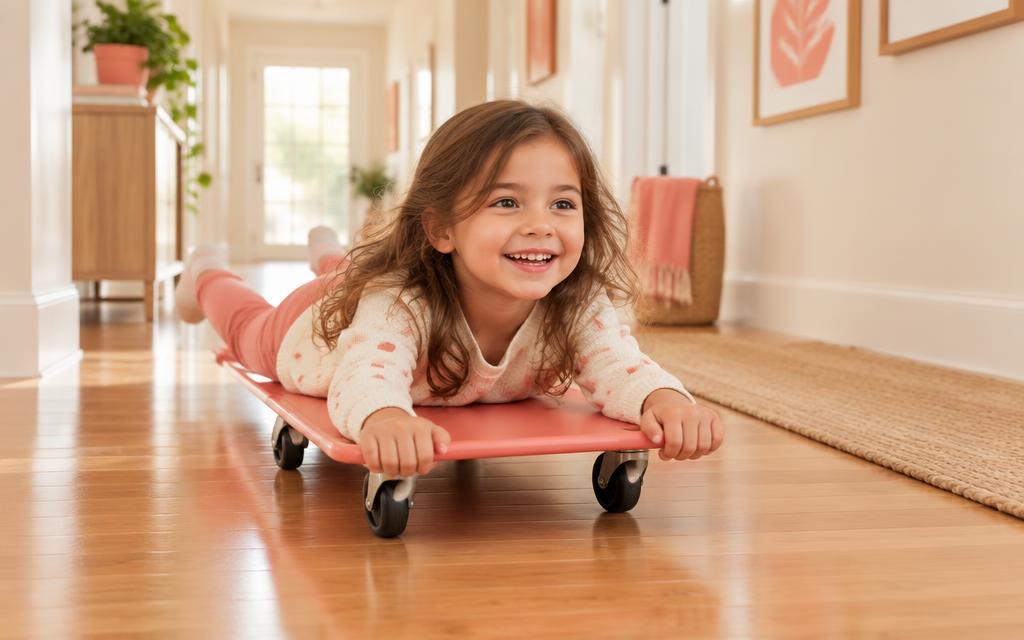
[Scooter boards](amazon-search:kids scooter board sitting). These small boards on castors are a therapy classic. Children lie on their tummy and pull themselves along with their arms, which builds shoulder strength, core stability and coordination. Look for a sturdy board with handles and smooth-rolling wheels, and always use it away from stairs and furniture edges.
[Weighted items](amazon-search:weighted lap pad children). Weighted lap pads, blankets and shoulder wraps provide deep pressure that many children find calming and organising. The general guidance is around ten percent of your child''s body weight, but check with a professional first.
[Resistance bands and stretchy toys](amazon-search:kids resistance band stretchy toys). Pulling and stretching against resistance gives strong proprioceptive feedback through the arms and hands.
[Crash mats and cushions](amazon-search:kids crash mat). A safe pile of cushions or a proper crash mat gives children a place to jump, fall and push safely.
[Push and pull activities](amazon-search:kids pull along wagon). A loaded laundry basket to push, or a pull-along wagon, works the whole body and costs very little.
A word of caution: proprioceptive equipment is most effective when it matches your child''s specific needs. If your child is seeing an occupational therapist, ask them which activities they would recommend before investing in larger items.