
Family Life
Gross motor toys for hypermobility: safe equipment to build core strength
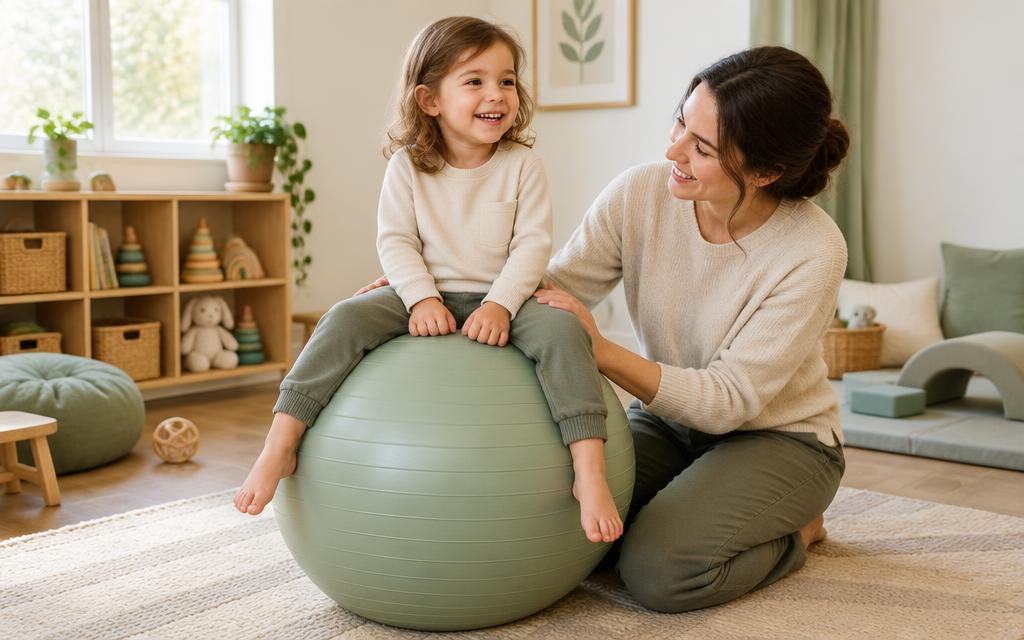
Children with hypermobility have joints that move further than usual, which can make them tire quickly, struggle with balance, or find physical activities harder than their friends. The right equipment helps build the muscle strength that supports those loose joints, but safety matters more here than anywhere. Here is what works.
[Balance cushions and wobble boards](amazon-search:kids balance cushion wobble board). These build the small stabilising muscles around ankles and hips. Always start with support within reach, because hypermobile joints are less stable.
[Soft climbing blocks and tunnels](amazon-search:soft play climbing blocks kids). Low, soft climbing equipment lets children build strength without the risk of falls from height. Avoid high climbing frames until strength has improved.
[Therapy balls](amazon-search:therapy ball kids). Sitting, bouncing gently and lying over a large therapy ball works the core muscles that support the spine. Choose a size where your child''s feet touch the floor when sitting.
[Scooter boards](amazon-search:kids scooter board sitting). Tummy-time on a scooter board strengthens shoulders and core without stressing joints.
[Low balance beams](amazon-search:kids low balance beam). A beam just a few centimetres off the ground builds balance confidence safely.
[Resistance bands](amazon-search:kids resistance bands). Gentle, supervised resistance work builds muscle around vulnerable joints.
What to avoid: trampolines and bouncy castles can overextend hypermobile joints, and high-impact activities may cause pain. If your child has diagnosed hypermobility, ask their physiotherapist which activities are appropriate, because the right level of challenge varies from child to child. Our Health tool explains how to access physiotherapy if you are not already under a service.